History
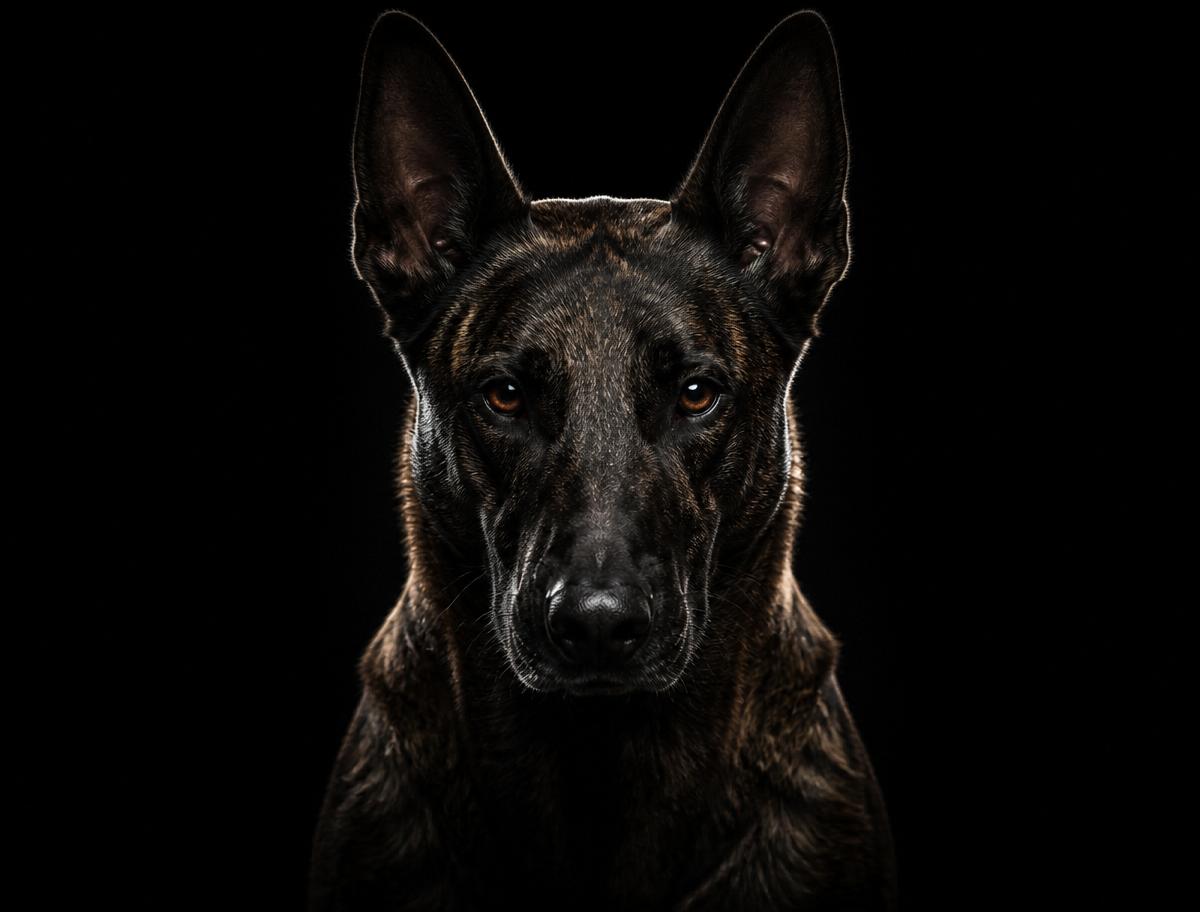
The Hollandse Herder developed as an all-purpose farm dog in the sandy Dutch heathlands, herding, guarding and pulling carts. Industrialisation nearly erased the breed, and it survived largely because the Dutch police and KNPV community valued its working ability.
Modern Dutch Shepherds share considerable ancestry with the Malinois; the two are frequently crossed in KNPV programmes where function outweighs registry purity.
Characteristics
The distinctive brindle coat comes in short-haired, long-haired and rough-haired varieties, with short-hairs dominating working circles. Build is athletic and slightly heavier than the average Malinois, with excellent feet and famously durable joints.
Temperament and drive
Dutchies tend to be marginally more environmentally aware and independent than Malinois, with strong handler loyalty once the relationship is established. Prey and hunt drives are very high; defence is typically clear and matures steadily.
- Outstanding detection and search capability
- Very high durability and pain tolerance
- Strong problem solvers — they exploit weak training
- Excellent grip quality with clean defensive engagement
Training
Because Dutch Shepherds think for themselves, criteria must be airtight. Vague obedience produces creative shortcuts. Reward-based marker training suits them extremely well, and their willingness to problem solve makes them a joy in scent detection and mobility work.
Health
One of the healthier working breeds. Screen for hip and elbow dysplasia, goniodysplasia in rough-haired lines, and inflammatory myopathy in a small number of families. Longevity is generally excellent.
Suitable owners
Best suited to handlers with previous high-drive breed experience who want a durable, thinking working dog. Requires daily engagement, secure containment and consistent structure.