History
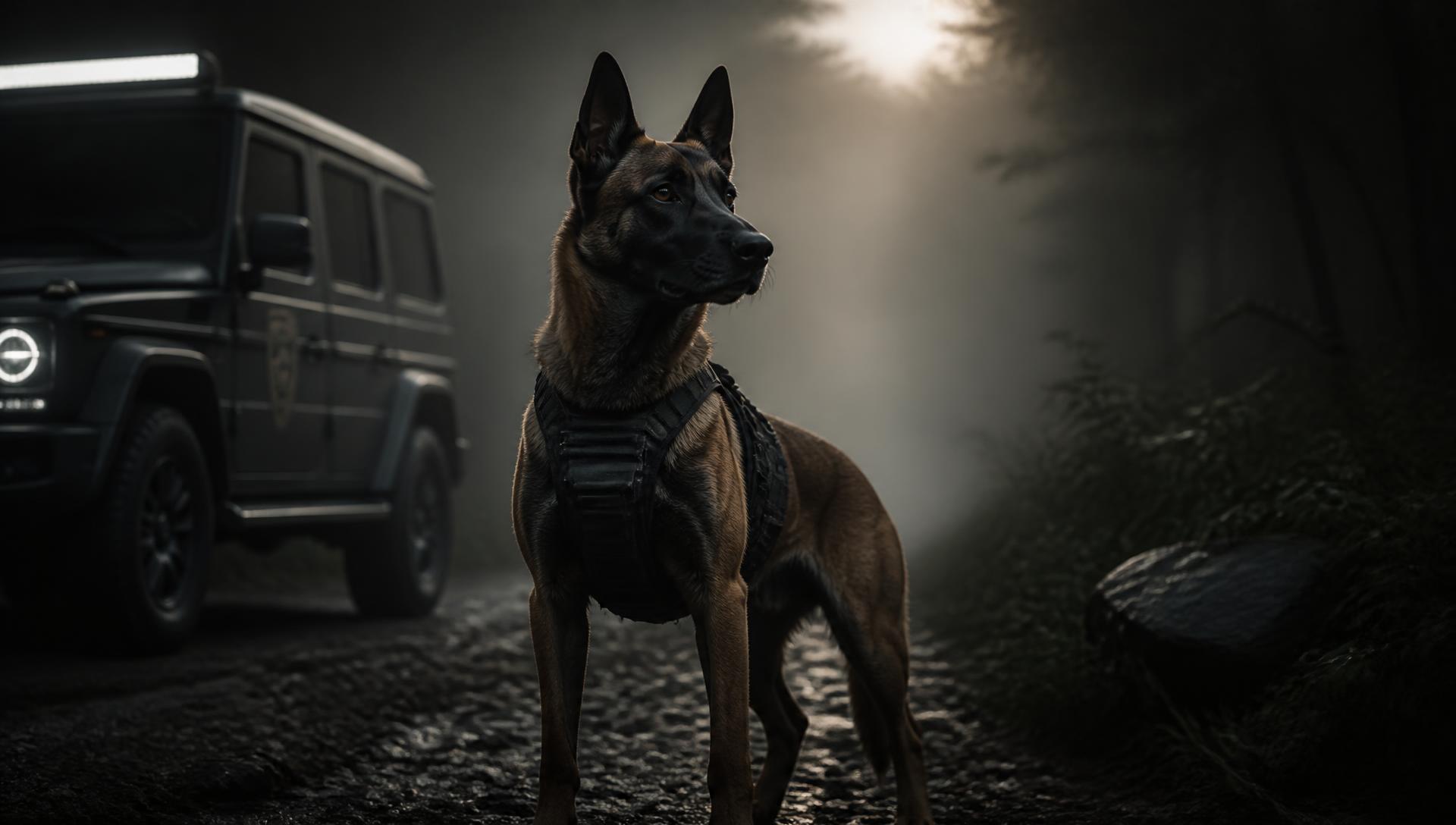
The Malinois is one of four Belgian shepherd varieties, named after the city of Mechelen (Malines). Standardised in the late nineteenth century as a livestock and general-purpose farm dog, it was quickly adopted by Belgian police and, by the mid twentieth century, by the Dutch KNPV programme.
KNPV shaped the modern Malinois more than any breed club. Its punishing practical trials — long bites, water work, vehicle searches, transport under distraction — rewarded hardness, grip quality and nerve, and produced the type now found in military units worldwide.
Characteristics
Physically the Malinois is a square, light-boned athlete built for endurance and acceleration rather than mass. The short fawn to mahogany coat with a black mask sheds heavily but needs little grooming. Structure is functional: moderate angulation, tight feet and a level topline that supports long working careers.
Temperament
A correct Malinois is confident, socially neutral, intensely handler-focused and almost obsessive about work. It is not naturally a couch dog. Without structured outlets it will invent its own, usually at the expense of your home, your garden or your sanity.
Well-bred examples are stable and safe around people. Poorly bred examples are the source of the breed's reputation for frantic, sharp behaviour — a symptom of weak nerves, not of breed type.
Drive
Prey drive is extreme and recovers instantly, which is what makes the breed so useful in bite work and detection. Hunt drive is relentless. Defence typically matures later, around eighteen to twenty-four months, and should never be forced early.
- Prey drive: very high, fast recovery between repetitions
- Hunt drive: outstanding — a top detection breed
- Defence: matures late; require genetic clarity before pressure work
- Pain tolerance: high, which demands fair, precise training
Intelligence and working ability
The Malinois learns extremely quickly — including things you did not intend to teach. Its problem-solving ability makes it exceptional in scent work, patrol, apprehension and mobility roles, and equally capable in mondioring, IGP, KNPV, agility and detection sport.
Training
Malinois training must be clear, fast-paced and fair. The breed thrives on marker-based reinforcement and short, high-value sessions. Because arousal climbs quickly, control inside drive is trained from the very beginning, alongside a genuine off switch in the home.
Expect to train daily. Twenty focused minutes plus a settled, structured day beats two hours of unstructured ball throwing, which simply builds an unfulfillable adrenaline habit.
Health
Generally a robust, long-lived breed. Screen for hip and elbow dysplasia, progressive retinal atrophy and, in some lines, epilepsy and anaesthesia sensitivity. Working conditioning, lean body weight and joint-aware exercise in the first eighteen months are the biggest health levers you control.
Suitable owners
The Malinois suits handlers who train as a hobby or profession: sport competitors, security operators, detection handlers and highly committed private owners with secure property and time. It does not suit first-time owners, low-activity households, or anyone who wants a dog that can be left alone all day.