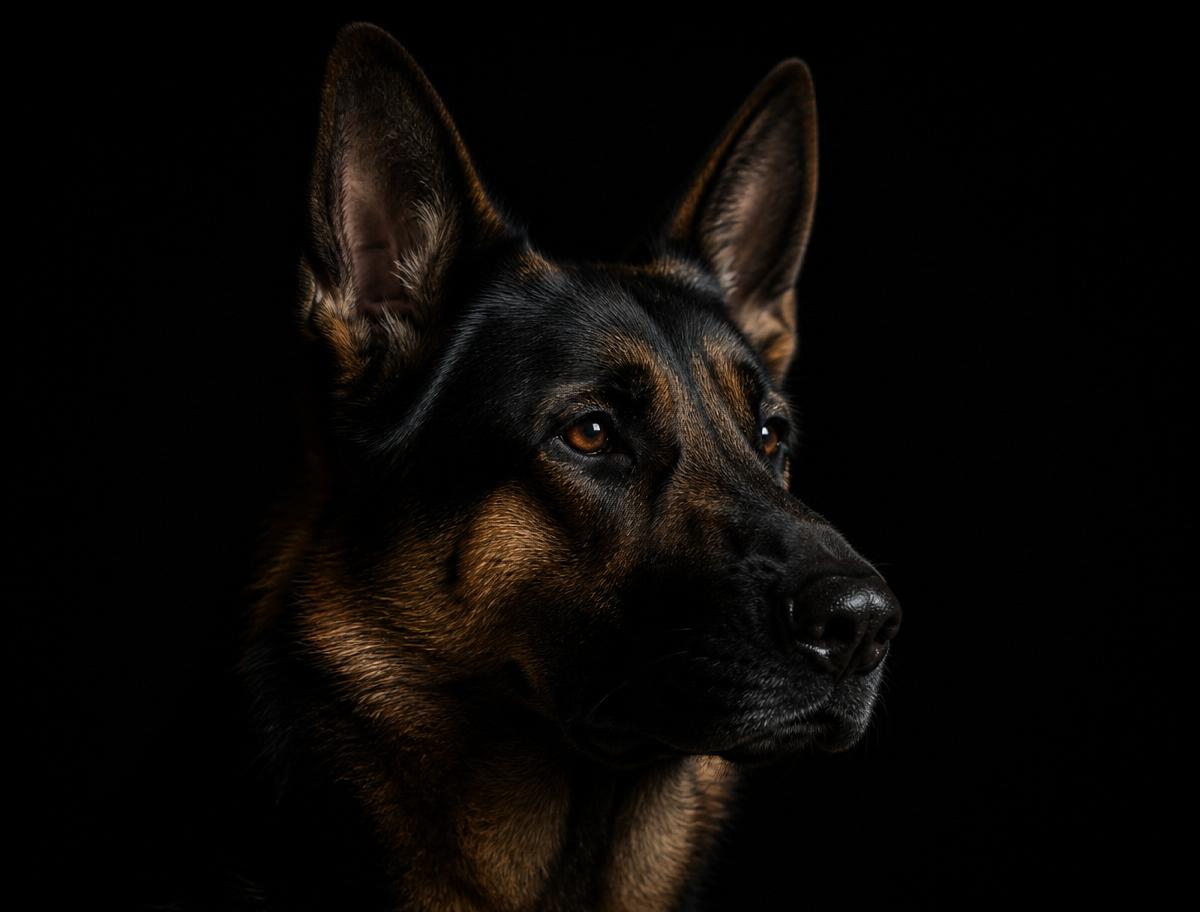
History
Founded in 1955, the Czechoslovakian border patrol breeding programme at Libějovice produced dogs for guarding the Iron Curtain frontier. Selection was ruthless: dogs worked long shifts outdoors in extreme weather, with poor performers removed from the programme entirely.
The result is a population with unusual uniformity — dark sable pigment, heavy bone, strong nerve and a pronounced protective instinct.
Characteristics and temperament
Czech dogs are typically larger boned and slower maturing than West German working lines, with deep chests, powerful heads and dense coats. Temperament is serious and territorial without instability: they are watchful with strangers, deeply bonded to their household and confident in confrontation.
Drive and working ability
Defence drive is typically stronger and appears earlier than in other shepherd lines, and grip is famously full and calm. Tracking ability is excellent, and stamina in cold, wet conditions is outstanding.
- Strong natural protective and territorial instinct
- Full, hard grips with excellent civil clarity
- Very high environmental hardiness
- Slower maturity — plan an eighteen to thirty month development curve
Training
Because defence appears early, Czech dogs need scrupulously fair handling and heavy investment in neutrality and social exposure before protection work begins. Handled correctly they are exceptionally reliable estate and family protection dogs.
Health and suitable owners
Health considerations mirror the German Shepherd generally, with generally good hip statistics in well-managed Czech kennels. These dogs suit owners with rural property, security requirements or serious protection ambitions — and experience of confident, territorially minded dogs.